Skip to content
  • Home
  • About Us
  • Services
    • CXO Meet
    • Sales Outsourcing
    • Brand Marketing
    • The Conclave
  • Startup Stack
  • Contact Us

Get started

Give us a call or fill in the form below and we will contact you. We endeavor to answer all inquiries within 24 hours on business days.

Edit Content

    Emerging Disruptors

    • Home
    • Emerging Disruptors
    Emerging Disruptors

    The Billion-Dollar Delivery: The Porter Story (2025)

    September 30, 2025 Admin No comments yet

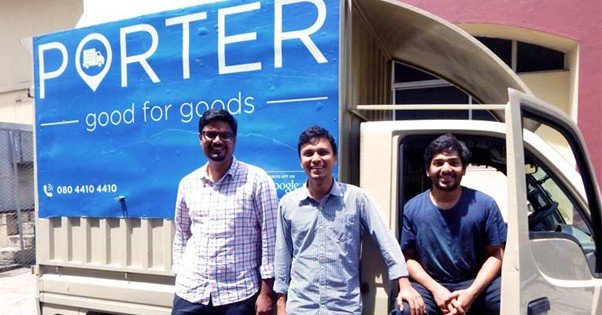
    Chapter 1: The Last Mile Problem (2014-2023) In the beginning, logistics in India’s metro cities wasn’t just fragmented; it was a chaos engine running on intuition, high fuel costs, and sheer hope. For a small business owner needing a tempo to shift $5,000 worth of goods across Bangalore, the process involved three phone calls, 45 minutes of negotiation, and absolutely zero guarantee of arrival time. This was the problem that Pranav Goel, Uttam Digga, and Vikas Choudhary set out to solve in 2014 with Porter. Their vision was simple: bring the Uber model to intra-city goods movement. They weren’t building a trucking company; they were building an intelligence layer that could match an atom (the load) with a molecule (the truck or two-wheeler) in real-time. The early years were a relentless, grinding test of unit economics. Porter’s innovation wasn’t just the app, but the asset-light model—partnering with existing truck owners and bike riders, digitizing their schedules, and optimizing their return trips, effectively turning a single-trip loss into a multi-trip profit. They prioritized MSMEs (Micro, Small, and Medium Enterprises), the backbone of the Indian economy, who paid immediately and provided recurring, predictable demand. This laser focus on small-scale, high-frequency B2B transactions created a fundamentally resilient cash flow structure, unlike peers chasing slow-paying large enterprises or high-burn consumer-only models. By 2023, the scale was impressive: 20+ cities, hundreds of thousands of registered drivers, and annual operating revenue soaring past $300 million. But the market had changed. Quick commerce giants were moving into last-mile logistics, and while their focus was tiny parcels, the sheer volume threatened to dilute the driver base. Porter needed to make a decisive move to solidify its leadership and prove it wasn’t just a great logistics company, but a genuine tech platform. Chapter 2: The Quantum Leap (Project Velocity, 2024) In late 2023, CEO Uttam Digga greenlit “Project Velocity,” a 12-month strategy designed to achieve profitability and a $1 billion valuation by mid-2025. The core of Velocity had three pillars: The year 2024 was defined by execution ruthlessness. The team narrowed its focus, slashing non-core marketing expenses and doubling down on driver onboarding and training. The results were visible in the financials. For the fiscal year ending March 2024, Porter managed to cut its net losses by 45%, even as revenue climbed by a staggering 56%. The unit economics had finally flipped decisively to positive. Chapter 3: The Series F and the Valuation Moment (May 2025) By the end of Q1 2025, the data was undeniable: Porter was profitable on an operational level across its major markets and had built a moat around its core business that was technologically impenetrable. They had redefined what it meant to move goods in India. No longer was it a transaction; it was a frictionless utility. The atmosphere in the Bengaluru headquarters was tense but electric. The Series F round, initially scoped at $150 million, grew to $200 million, attracting the attention of global investment heavyweights like Kedaara Capital and Wellington Management. They weren’t just buying growth; they were buying proven financial discipline in a notoriously cash-hungry sector. On May 8, 2025, the news broke. Porter had closed its Series F, entering the coveted unicorn club with a valuation between $1.1 and $1.2 billion. It was India’s second unicorn of the year, a moment that heralded not just a financial victory, but a cultural shift. The press release was issued, celebrating the technological platform that empowered over 300,000 gig workers and served over 3 million customers monthly. The founders, often humble and execution-focused, finally allowed themselves a moment of reflection. “We didn’t set out to be a billion-dollar company,” Uttam Digga said during the celebratory huddle. “We set out to ensure that the small store owner, the vendor, and the driver were treated with transparency and efficiency. The valuation is simply the market recognizing the sheer economic value of taking a broken system and making it intelligent. We are not just delivering parcels; we are delivering economic empowerment, one perfectly routed trip at a time.” The Series F capital was immediately earmarked for the next great scaling challenge: expanding into 20 new Tier 2 and Tier 3 cities, and investing heavily in the infrastructure to support over 1 million gig workers, solidifying Porter’s position as the ubiquitous, technology-first logistics layer of India. The billion-dollar delivery was complete, but the true journey of scaling had only just begun. Disclaimer: We do not claim ownership of any data, images, or thoughts shared on this article. Content is based on publicly referenceable data and provided for informational purposes only and the. Any views expressed belong to their respective owners. We strive for accuracy but disclaim liability for reliance on the content.
    Emerging Disruptors

    Juspay: The Architects of the Invisible From Orchestration to Unicorn

    September 30, 2025 Admin No comments yet

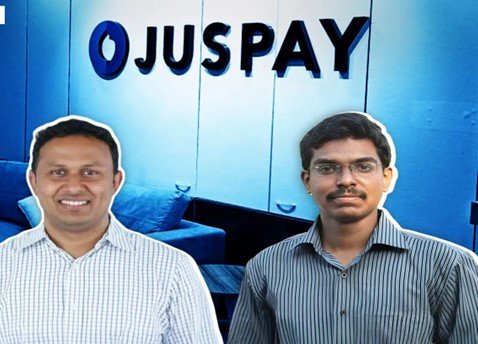
    Chapter 1: The Inflection Point The air in Juspay’s Bengaluru headquarters in late 2024 felt heavy, thick with the silence that follows seismic change. For years, Juspay had been the invisible engine of India’s digital commerce, the elegant, high-reliability layer ensuring that transactions for giants like Amazon, Google, and Microsoft never failed. They were the premier Payment Orchestrator, the central nervous system routing billions of dollars seamlessly. But the ground had shifted. Major payment aggregators, seeking tighter control over their merchant relationships, had started to disengage from orchestration platforms. It was a strategic challenge—a move that questioned whether Juspay was truly essential infrastructure or a dispensable middle layer. Co-founder and CEO Vimal Kumar, however, saw not a threat, but the ultimate validation of their core belief: complexity needed a single, elegant solution. “Our mission was never just about routing,” he told the team in January 2025. “It’s about making payments an accessible, open utility, like the internet itself. If they want to control the gateway, we will build the highway and the operating system that runs every vehicle on it.” The goal wasn’t just survival; it was acceleration. The target: Unicorn status by the end of Q1 2025, fueled by an uncompromising strategy: global expansion, regulatory mastery, and total technological dominance driven by AI. Chapter 2: The Two Pillars of Scale Juspay’s counter-strategy focused on two audacious bets: the global deployment of Hyperswitch and the integration of the Nexus AI layer. Hyperswitch: The Open-Source Global Play Hyperswitch, Juspay’s open-source payment switch, became the spearhead of their international push. Vimal, along with co-founder Ramanathan RV, believed that in an increasingly fragmented global payments landscape, the market craved an open, transparent, and developer-friendly solution. Hyperswitch wasn’t just a product; it was a manifesto for interoperability. This open-source philosophy resonated immediately with fintech startups and legacy banks outside of India, particularly in complex regions like Southeast Asia and Latin America. By offering a customizable, no-code engine that could connect to any payment processor, currency, or local method, Juspay transformed from a niche Indian solution into a global infrastructure provider. Nexus AI: The Intelligence of 99.999% Internally, the team introduced Nexus AI, an advanced machine learning engine designed to optimize every millisecond of a transaction lifecycle. It moved beyond simple rules-based routing. Nexus AI leveraged real-time issuer health data, historical consumer behaviour, and even contextual data (like time of day or device type) to predict the highest probability route for success. The results were transformative. Merchants using the enhanced orchestration platform reported a 5-10% improvement in transaction success rates—a massive gain for businesses processing millions of transactions daily. This uplift in conversion, coupled with the system’s legendary “five nines” (99.999%) reliability, proved Juspay’s infrastructure wasn’t a choice; it was a competitive necessity for any enterprise focused on revenue retention. Chapter 3: Mastering the Ecosystem The regulatory piece fell into place perfectly, validating their domestic resilience. In early 2025, after months of rigorous audits and technical reviews, Juspay received the coveted Payment Aggregator (PA) license from the Reserve Bank of India. This license fundamentally changed their game, allowing them to offer end-to-end payment acceptance, directly competing in the full-stack space while maintaining their orchestration layer superiority. This pivot wasn’t without its challenges. Sheetal Lalwani, Co-founder and COO, was instrumental in steering the compliance and global expansion efforts. Her team deftly managed the simultaneous expansion across APAC, the UK, and North America, ensuring the platform adhered to dozens of disparate regulatory frameworks, from PCI DSS 4.0 standards to local data residency laws. The market took note of their tenacity. Juspay had not only absorbed the loss of major partners but had used the moment to strategically upgrade their offering, transforming a business challenge into an unprecedented growth engine. The sheer volume was staggering: they were consistently processing over 200 million transactions daily, representing an Annual Total Processed Volume (TPV) of over $900 billion. Chapter 4: April 7th, 2025: The Leap The whispers started in March, but the confirmation arrived on April 7, 2025. Private Equity powerhouse Kedaara Capital stepped in to lead the Series D funding round, joined by existing believers SoftBank and Accel. The round secured a substantial injection of capital—$60 million—but the number that truly mattered was the valuation. The successful fundraise valued Juspay at over $1 billion, officially crowning them India’s first fintech unicorn of 2025. The news wasn’t just a victory for the founders; it was a powerful statement about the resilience of core infrastructure technology. Juspay hadn’t built a consumer app or a flashy frontend; they had built the complex, robust plumbing that made everyone else’s flash work. Vimal, addressing the company after the announcement, kept the focus forward: “This valuation is a checkpoint, not a destination. Our true value lies in the billions of successful transactions we enable, the revenue we recover for our merchants, and the open ecosystem we are creating globally. We skipped the ‘Gazelle’ phase and went straight to Unicorn because we never stopped building the future of payments. Now, we use this capital to accelerate the development of HyperCredit, embed lending capabilities, and make our AI layer truly sentient.” Juspay’s journey to the unicorn club in 2025 wasn’t a sprint but a marathon won by a deep commitment to first-principles engineering. They proved that in the chaotic world of digital finance, the greatest scale comes not from chasing trends, but from building the unshakeable foundation beneath them. They are the architects of the invisible, ensuring that the magic of digital commerce happens every single time.

    Emerging Disruptors

    The Kirana Renaissance: Jumbotail’s Story to a $1 Billion Valuation

    September 30, 2025 Admin No comments yet

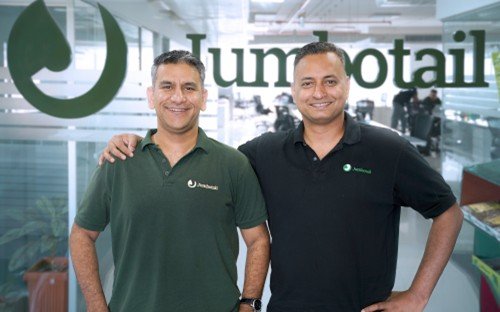
    The year is 2025. The air in Bengaluru, a city that runs on code and chai, crackles with the news. On June 30th, Jumbotail—the B2B e-commerce and New Retail platform for food and grocery—closed a landmark $120 million Series D funding round, led by SC Ventures, the innovation arm of Standard Chartered Plc. The news wasn’t just about the dollar amount; it was the final, definitive stamp: Jumbotail was officially India’s newest Unicorn, valued at over $1 billion. It had taken a decade, but the ‘Kirana Renaissance’ they championed had arrived. This was no overnight sensation; it was a methodical, principle-driven scaleup story. Co-founders S. Karthik Venkateswaran and Ashish Jhina had spent years in the trenches of the Indian Army and Silicon Valley, respectively. Their mission, forged in a Stanford MBA classroom, wasn’t to compete with the humble kirana store, but to arm it. They saw not a fragmented, struggling ecosystem, but the resilient, $600-billion-plus backbone of Indian retail—a backbone that simply lacked modern tools. Phase I: The First Principles of Scale (2015-2021) The early years were defined by building an infrastructure that seemed insane to the VCs of the time: a full-stack, tech-powered supply chain. While others chased scale-at-any-cost, Jumbotail chased capital efficiency and operational excellence. Their proprietary ‘GoldenEye’ Retail Operating System was a testament to this, giving a small shopkeeper the power of a modern supermarket manager: digital invoicing, inventory tracking, demand forecasting, and a crystal-clear P&L. “We solved logistics first,” Karthik often said. “If the product doesn’t arrive on time, in full, and at the right price, nothing else matters.” Their in-house logistics, initially a source of investor skepticism, became their competitive moat. By 2021, Jumbotail boasted a 98% order fill rate and 95% on-time delivery—numbers unheard of in the fragmented B2B grocery space. This reliability built trust with the small and medium kiranas—a trust that was the bedrock of their next, most crucial step. Phase II: The Credit Multiplier (2022-2024) By the beginning of 2022, the e-commerce platform had gained traction, serving tens of thousands of retailers. But the founders knew the deepest pain point of the kirana owner: working capital. The traditional kirana was constantly beholden to wholesalers and distributors, caught in a tight, often exploitative, cash cycle. This is where Jumbotail Capital, their embedded fintech platform, became the scaleup catalyst. Leveraging transactional data from the e-commerce platform—every order, every payment, every restock—they created a proprietary credit scoring model. They partnered with lending institutions, offering small, collateral-free credit lines right in the app. This wasn’t just an add-on; it was an enabler. A kirana could now order more stock, increase its range, and capture more sales without worrying about immediate upfront payment. This boosted the average order value (AOV) and the purchase frequency of their retailers, creating a virtuous, compounding loop. By late 2024, Jumbotail Capital was responsible for a quarter of the company’s overall revenue, a powerful demonstration of product-market fit in a financial services-starved sector. Phase III: The Leap to Unicorn Status (H1 2025) The final push for unicorn status came with a strategic, industry-defining move in the first half of 2025: the acquisition of Solv India. Solv, a B2B commerce and financial services platform incubated by the funding round’s lead investor, SC Ventures, brought two critical elements to the table: The Series D funding, led by SC Ventures and joined by existing backers like Artal Asia, was the financial validation of this strategic vision. The capital infusion wasn’t for vanity; it was explicitly earmarked for AI-native solutions and talent acquisition in Decision Science and Machine Learning. The goal was to cement their leadership by building the most efficient and lowest-cost supply chain in the country—an AI-powered gateway to India’s mass-market consumption. On June 30, 2025, the internal email announcing the unicorn milestone went out, signed by both Karthik and Ashish. It wasn’t just a celebration of a $1 billion valuation; it was a celebration of the hundreds of thousands of small businesses they had empowered. The true scaleup was never about the valuation multiple; it was about the impact multiple—empowering a million retailers to serve 400 million middle-income Indian consumers. The Kirana Renaissance was finally an economic reality. Disclaimer: We do not claim ownership of any data, images, or thoughts shared on this article. Content is based on publicly referenceable data and provided for informational purposes only and the. Any views expressed belong to their respective owners. We strive for accuracy but disclaim liability for reliance on the content

    Emerging Disruptors

    The Apex of Paws: Drools’ Leap to Unicorn Status (May 2025)

    September 30, 2025 Admin No comments yet

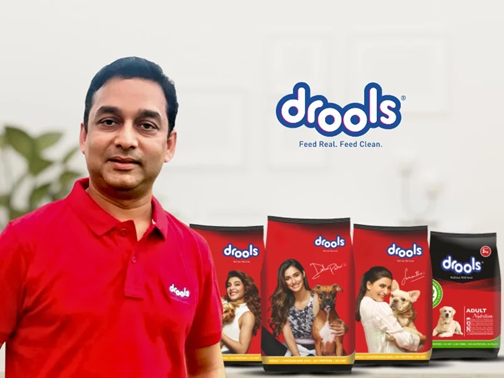
    The air in the Bengaluru boardroom was thick with anticipation. It was a crisp May morning in 2025, and outside, the Indian pet care market was booming—a landscape the company, Drools, had spent over a decade shaping. The team, led by a calm but visibly energized Founder, Fahim Sultan, and the dynamic CEO, Dr. Shashank Sinha, was not here for another market update. They were here for the final signature on a deal that would catapult their humble domestic success into a global financial landmark. Chapter 1: The Pre-Flight Checklist (The $600M Valuation) Drools’ journey from a division of the IB Group to an independent entity was the perfect Scaleup Story. It wasn’t about a sudden viral product; it was about unwavering execution, vertical integration, and a deep, scientific understanding of pet nutrition. By 2024, they were already a formidable force. The previous year’s Series B round of $60 million from L Catterton—the private equity arm with a luxury goods lineage—had been the formal “pre-flight” check. It had validated their operational model: six fully-owned manufacturing units, a colossal 1.6 million square feet of warehousing, and an incredibly lean supply chain. This investment had been strategically deployed to expand manufacturing capacity and turbocharge their omnichannel distribution, reaching over 40,000 retail outlets while simultaneously dominating the Amazon pet food category with their diverse portfolio (Pure Pet, Meat Up, Canine Creek). The growth metrics were undeniable: revenue had seen a stunning 50% jump in FY24. But the scaleup wasn’t just domestic. Drools was already a leading exporter, shipping its science-backed nutrition to 22 countries across the Middle East, Africa, and Asia-Pacific. The goal was 50 countries by 2025. This global ambition, coupled with India’s exploding pet-parent culture (driven by Gen Z and millennials who treat pets as family), made Drools a high-potential asset. Chapter 2: The Strategic Pivot (The Unicorn Catalyst) The traditional path to unicorn status in the D2C world often involves a massive, dilutive Series C funding round. Drools chose the path of strategic validation. The catalyst for the $1 billion valuation was the quiet, calculated entry of a global behemoth: Nestlé S.A. The Swiss consumer goods giant, whose global pet-care division, Purina, was a major revenue pillar, sought a strategic foothold in India’s hyper-growth market without the risk of a full-scale operational acquisition. In late May 2025, the news broke: Nestlé had acquired a minority stake in Drools. This was a masterclass in scaleup strategy. Chapter 3: The Impact and The Future (A New Apex) The immediate impact was electric. The unicorn status was a victory for the entire domestic pet care ecosystem. But for Drools, it was a platform, not a finish line. The new capital influx wasn’t for mere survival; it was for doubling down on innovation and technology. The scaleup plan for the rest of 2025 was clear: The final meeting adjourned not with loud cheers, but with a quiet, confident resolve. Drools hadn’t just reached a number; they had executed a strategic masterpiece. They had turned a commodity business into a high-growth, technology-enabled consumer brand, validated by the world’s best. The story of Drools becoming a unicorn in 2025 was the definitive tale of how a local champion, focused on product, process, and partnership, scaled its way to the top of the global pet food chain. The Apex of Paws had been reached, and the world was now ready to pay attention to India’s home-grown pet care revolution. Disclaimer: We do not claim ownership of any data, images, or thoughts shared on this article. Content is based on publicly referenceable data and provided for informational purposes only and the. Any views expressed belong to their respective owners. We strive for accuracy but disclaim liability for reliance on the content

    Search

    Categories

    • Emerging Disruptors 4
    • The Established Titans 15

    Recent posts

    • The Billion-Dollar Delivery: The Porter Story (2025)
    • Juspay: The Architects of the Invisible From Orchestration to Unicorn
    • The Kirana Renaissance: Jumbotail’s Story to a $1 Billion Valuation
    • Home
    • About Us
    • Startup Stack
    • Contact Us
    • Services
    • CXO Meet
    • Sales Outsourcing
    • Brand Marketing
    • The Conclave

    Copyright © 2025 Kompreneur

    • Privacy Policy